How K-Dramas and Films Are Reshaping Korean Food's Global Image
lee hyewon- food director in Korea.
Twenty years ago, most people overseas knew almost nothing about Korean food. Even those who had tried it often remembered it the same way: strong garlic, lots of heat. Living abroad at the time, I felt that view up close. When I asked foreign friends what they knew about Korean cooking, the answer was usually kimchi, and even kimchi came with a quick caveat about how spicy and pungent it was.
Japanese food, by contrast, already carried a polished, premium image around the world. It was the cuisine people saved for special occasions, the one nice restaurants showcased with care. I watched that and felt a real pang. I often wondered when, or if, Korean food would get the same kind of stage.
So every time I had a chance to introduce Korean food to foreigners, I tried to show them more than kimchi. Bulgogi and japchae. Bibimbap and jeon. Seasonal namul and the wide world of Korean soups and stews. I wanted to make clear that Korean cooking is not just about heat. It is about the seasons, the care behind each dish, the depth that fermentation brings, and a culture built around sharing food.
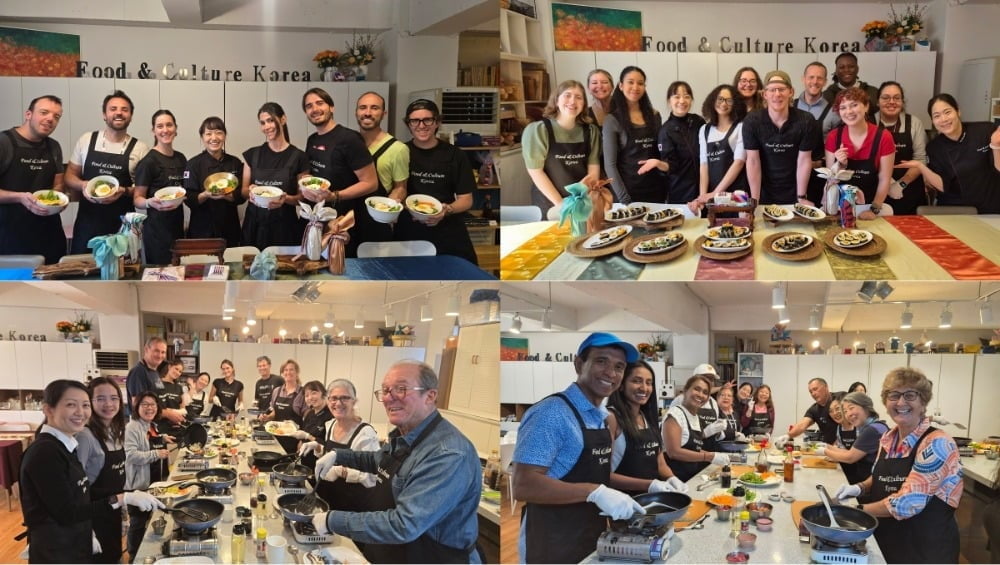
For years, I have taught Korean cooking classes for foreign students. People usually arrive a little nervous and a little curious. And almost everyone asks the same question first.
lee hyewon- food director in Korea.
"Is it very spicy?"
I used to laugh when I heard it, but it also stung a little. It was a reminder that Korean food was still filed under "spicy" and nothing else. By the end of class, though, the mood is completely different. Students tell me the dishes were easier to make than they expected. They say they had no idea Korean food was this varied. Many say they have fallen even deeper for it.
What surprises foreign students most is the taste of fermentation. Doenjang, soy sauce and gochujang, all built through long aging, can feel unfamiliar at first. Given a little time, that depth becomes one of the things they love most. After tasting doenjang soup in class, students often ask where they can buy the paste themselves. Even people who were intimidated by kimchi grow more curious once they try making different kinds.
One ingredient that fascinates students again and again is Korean soy sauce. Most arrive thinking soy sauce is soy sauce. When I have them taste guk-ganjang, brewed soy sauce, my own homemade soy sauce, and Japanese Kikkoman side by side, they are shocked at how different each one tastes and smells. After trying a long-aged homemade soy sauce, one student said it felt like an old wine, carrying the scent of time. Hearing that, I felt the depth of Korea's jang tradition all over again.
Korea's sauce-making culture really is remarkable when you stop to think about it. You ferment meju, you wait through long seasons, and the flavor is shaped by wind, sun and temperature. The deep taste of Korean food does not come from showy technique. It comes from time and patience. To me, that is one of the most beautiful things about it.
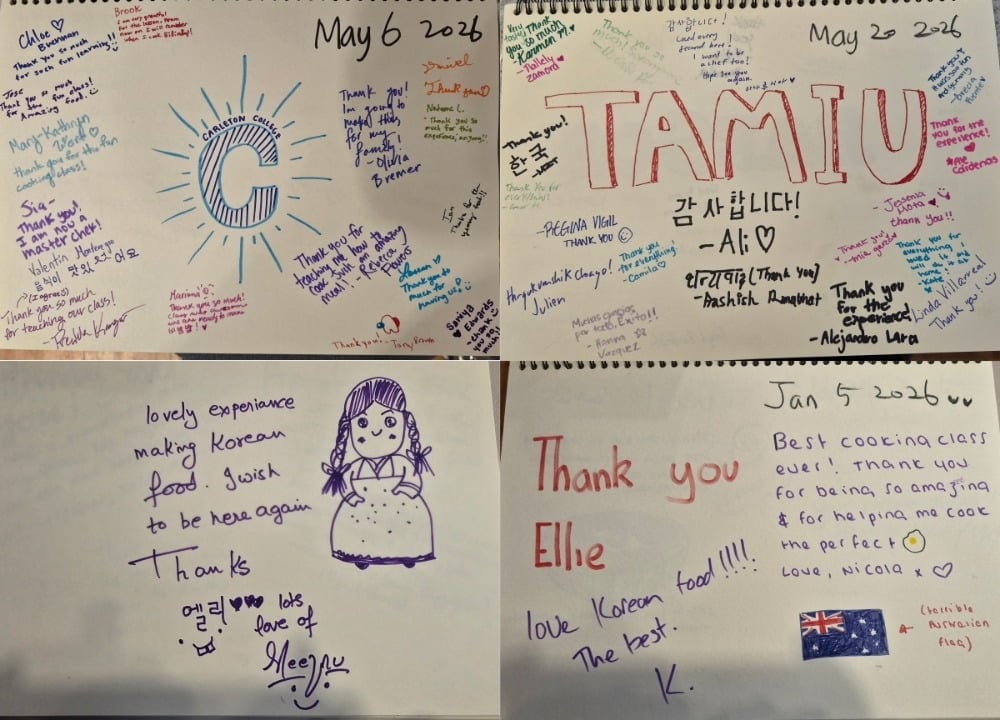
One day after class, a foreign student said something that stayed with me.
lee hyewon- food director in Korea.
In that moment I thought about Korean families at the table. The way someone sets a meal for another person, ladles out an extra bowl of hot soup, places a piece of meat on your plate and keeps saying, "Eat more." Korean food always carries the wish to feed someone well.
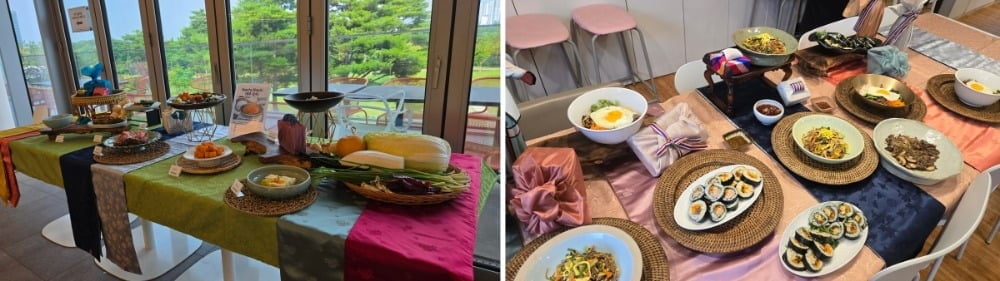
One of the things foreign students notice most is Korea's banchan culture. Instead of eating one dish on its own, you share many small flavors at the same time, and those dishes come together on the table as one warm scene. In much of the West, people are used to eating from their own plate, so a Korean table set up to be shared feels communal and welcoming in itself. One student told me, "Korean food doesn't feel like eating alone. It feels like eating together." I loved that line.
Korean food really does shine more when it is shared. A bowl of bibimbap finds its flavor in the way many ingredients come together, and Korean meals find theirs in the people gathered around the table. Maybe that is the point. Korean food is not only about balanced flavor. It is about the warmth between the people eating it.
That side of Korean food has been reaching the world more naturally through Korean dramas and films. In the past, I had to explain Korean dishes from scratch. Now, more and more students arrive already familiar with them, drawn in by something they saw on screen. "I wanted to try the dish I saw in that drama." "The japchae the actors were eating looked so good, I had to try it in Korea." "After watching that ramyeon scene, I started craving it every night." "I wanted to make the kimbap I saw in KPop Demon Hunters." I hear lines like these in class all the time.
Food scenes in Korean dramas and films are striking in their own way. It is often the simple home-cooked moments, not the fancy ones, that move people most. A family gathered around a late-night stew. Tteokbokki after a school exam with friends. Pajeon on a rainy day. Miyeok-guk on a birthday. Korean emotion and sensibility live inside those scenes.
When I work on food for films and dramas, one thing always guides me. Food is not just a prop to fill the frame. It carries a character's emotions, the period they live in, the relationships around them. For period pieces, I think carefully about what people in that era would have actually eaten, how it would have been cooked, and what kind of dishes it would have been served in. Sometimes a scene needs rough, humble food more than something elaborate. Sometimes all it needs is the warmth of a single bowl of white rice. The same is true for contemporary stories. Food is a language that can carry an entire scene without a word of dialogue.
In the last few years, the standing of Korean food has changed in a way I can feel. Where I once had to walk people through every dish, now many show up already curious, already a little attached, because of what they have seen on screen.
What strikes me most is that Korean food is no longer just an "exotic" cuisine. For some people, it has become comfort food, even a kind of memory. Foreign visitors return home missing kimchi-jjigae. They make bibimbap in their own kitchens to revisit their time in Korea. Hearing those stories means a lot to me.
I believe Korean media sits at the center of that shift. Food scenes in dramas and films do more than show a tasty dish. They show how Koreans live and feel. Through those scenes, audiences pick up the temperature and the mood of the country itself.
Maybe the real appeal of Korean food is not its flair but its warmth, the human feeling in it. A bowl of soup made with care. The deep taste of a sauce that took years to finish. The simple habit of offering food to the person next to you.
Like Korean jang, which only ripens slowly over a long time, Korean food may be doing the same thing in people's hearts, settling in, deeply, a little at a time.
Lee Hye won(food director)
Comments (0)
Loading comments…